Shipping note
Delfshaven, Rotterdam: A Walk Through the Old Harbour Quarter
- Shipped
- Reading time
- 4 min read
- Hold
- Harbour & River
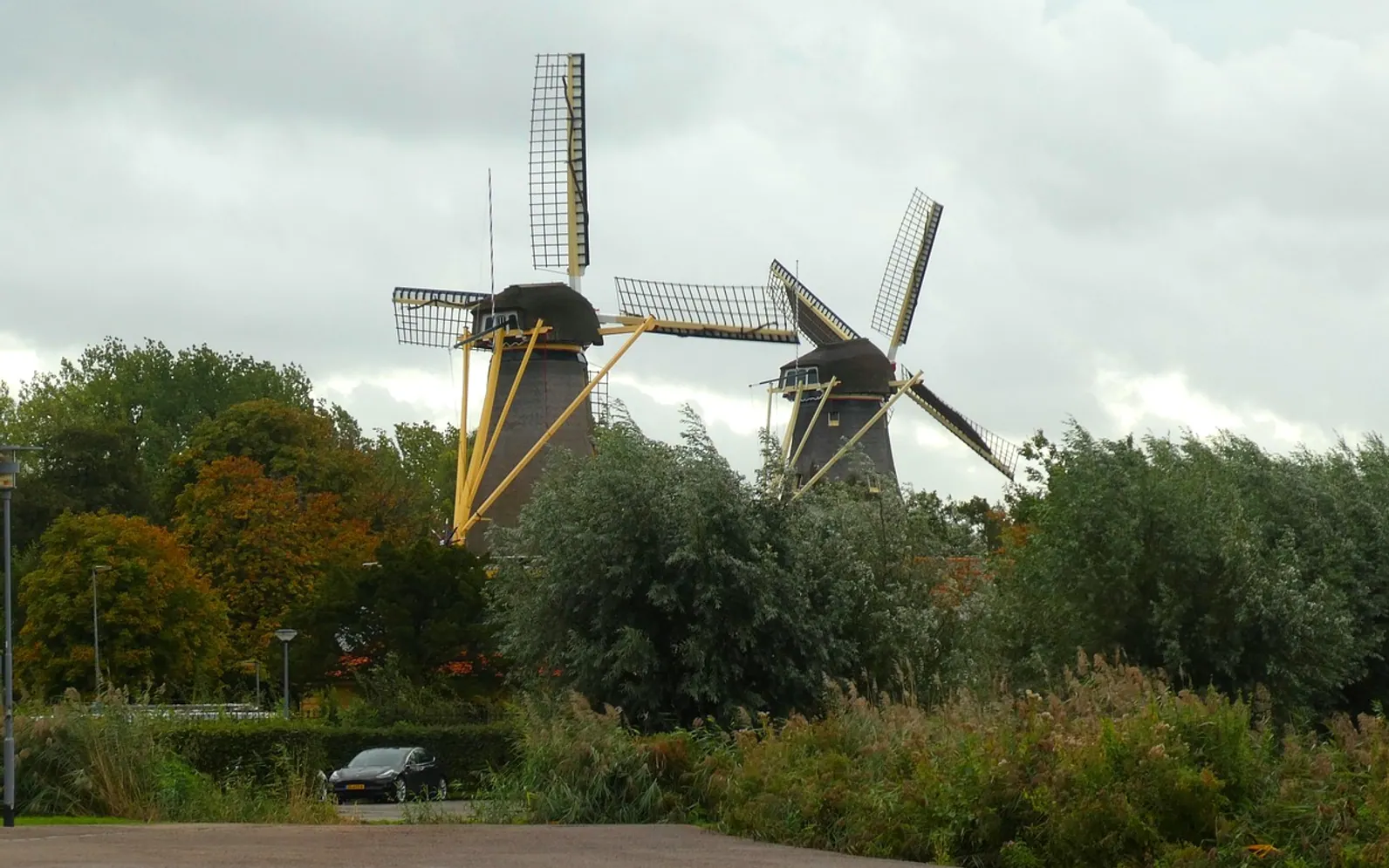
Step off the tram on a weekday morning and the noise of the main road fades within a minute. A narrow basin opens up, lined with brick warehouses and tall, gabled houses; a few old sailing barges lie against the quay, and at the end of the water a windmill turns above the rooftops. It is hard to believe that the glass towers of the Wilhelminapier are only a few kilometres away. This is Delfshaven, the part of Rotterdam that looks the way many visitors expect a Dutch city to look.
A harbour built for another town
Delfshaven did not start as part of Rotterdam at all. In the late fourteenth century the town of Delft, which lay inland without direct access to the Maas, dug a canal south to the river and built a small harbour at its end. The name simply means "Delft's harbour". For centuries goods for Delft were loaded and unloaded here, and a small community of merchants, sailors, fishermen and distillers grew around the quays. If you have already spent a day in Delft itself, our Delft day trip shows the other end of that old trade route.
The harbour town kept its independence until 1886, when it was absorbed into a fast-growing Rotterdam. Then, in May 1940, the bombing that flattened the city centre largely spared this western district. That stroke of luck is why the streets and quays here still show the older scale and materials that vanished elsewhere.
The Pilgrim Fathers connection
Delfshaven's best-known story belongs to 1620. A group of English Protestants who had lived for years in Leiden travelled down to this harbour and set sail on the Speedwell to join the Mayflower in England before crossing the Atlantic. Many Americans know them as the Pilgrim Fathers, and the church on the quay where they are said to have prayed before leaving is now often called the Pilgrim Fathers' Church. Visitors from the United States in particular come to see it, and a plaque on the quay recalls the departure.
The church is still in use, so check whether it is open before planning around a visit inside. Even from the outside, its simple tower above the water is one of the most photographed views in the district.
A walking route through the old quarter
The historic core is small enough to see in an hour, but it rewards a slower pace. This loop starts near the tram stop on the north side.
- The Achterhaven. Begin on the inner basin, where the quay is narrower and quieter. Look for the older façades with their stepped and bell-shaped gables.
- The Voorhaven. Follow the water south to the outer harbour, the busiest part of the district, lined with cafés and with historic vessels moored along both sides.
- The church on the quay. Stop at the Pilgrim Fathers' Church and read the plaques nearby.
- The windmill. Cross to the small basin known as the Aelbrechtskolk, where the windmill De Distilleerketel stands. It is a reconstruction of a mill that once ground grain for the area's gin distillers, and it still mills when the wind and volunteers allow.
- The statue of Piet Heyn. The seventeenth-century naval commander was born in Delfshaven, and his statue stands nearby on the edge of the old town.
- Down to the Maas. Finish by walking south to the river, where the views open out towards the newer harbour districts and the Euromast observation tower on the far side of the Parkhaven.
What to look for along the way
- Hoisting beams. Many old warehouses still have a beam and hook under the roof, once used to lift goods straight from the boats to the upper floors.
- Distilling history. Delfshaven was known for producing jenever, the Dutch forerunner of gin. Some former distillery buildings survive among the houses.
- Historic boats. The barges and small sailing ships in the basins are worth a closer look; several are lovingly maintained by their owners.
- Small bridges. The low drawbridges between the basins give the best angles for photographs of the gables reflected in the water.
Eating and drinking
The quays have a good spread of cafés, small restaurants and bars, many with terraces right on the water. Brewing has a long local tradition, and a beer or a coffee overlooking the Voorhaven is the classic way to end a walk here. On warm evenings the terraces fill up with locals as much as visitors, which keeps the atmosphere relaxed rather than touristy.
For a bigger choice of food, or for an evening on the south bank instead, the restaurants of Katendrecht are a short ride away.
Getting there
Delfshaven lies west of the city centre, and trams and the metro both stop within a few minutes' walk of the old harbour. Cycling from the centre along the river is easy and flat. The water taxi also stops nearby, which turns the trip into a small harbour tour of its own; our getting around guide explains how the different options work.
Fitting Delfshaven into a visit
Because it is compact, Delfshaven pairs well with a bigger sight. A morning on the water with a harbour boat tour followed by a late lunch on the quays makes a balanced day, as does an afternoon here and sunset from the Euromast across the water. For families, the windmill and the boats are usually the highlights; for history fans, the church and the quiet inner basin.
Whichever way you combine it, give yourself time to slow down. Delfshaven is less about ticking off landmarks than about sitting by the water and noticing how the city looked before it reinvented itself.
Small habits
Little things that make a city day easier
Tried on many rainy Tuesdays.
Pack a layer
The wind on the bridges and quays is colder than the forecast suggests.
Tap in, tap out
Forgetting to check out on trams and the metro costs more than the trip.
Go early
Popular sights are calmest in the first hour after opening.
Look up
Many of the best architectural details sit above shop-window height.
Carry a card
Card payments are accepted almost everywhere; some places prefer them to cash.
Lock the frame
If you rent a bike, lock the frame to something solid, not just a wheel.
Stowed alongside · Harbour & River
- Harbour & River
 Katendrecht, Rotterdam: A Neighbourhood Guide to 'De Kaap' Once a rough sailors' quarter, the peninsula locals call "De Kaap" is now one of the city's favourite places to eat, stroll and watch the harbour light change. 2 min read
- Harbour & River
 SS Rotterdam: Visiting the Former Ocean Liner in Katendrecht Once a transatlantic flagship, the SS Rotterdam now lies at a quay on the south bank as a hotel, restaurant and floating piece of history. 2 min read
- Harbour & River
 Port of Rotterdam: How to See the Harbour as a Visitor The port made Rotterdam, and it still shapes the city's skyline, economy and mood. Here is how to see it from the water, from land and from a museum. 2 min read