Shipping note
Modern Architecture in Rotterdam: A Self-Guided Walk
- Shipped
- Reading time
- 2 min read
- Hold
- Architecture
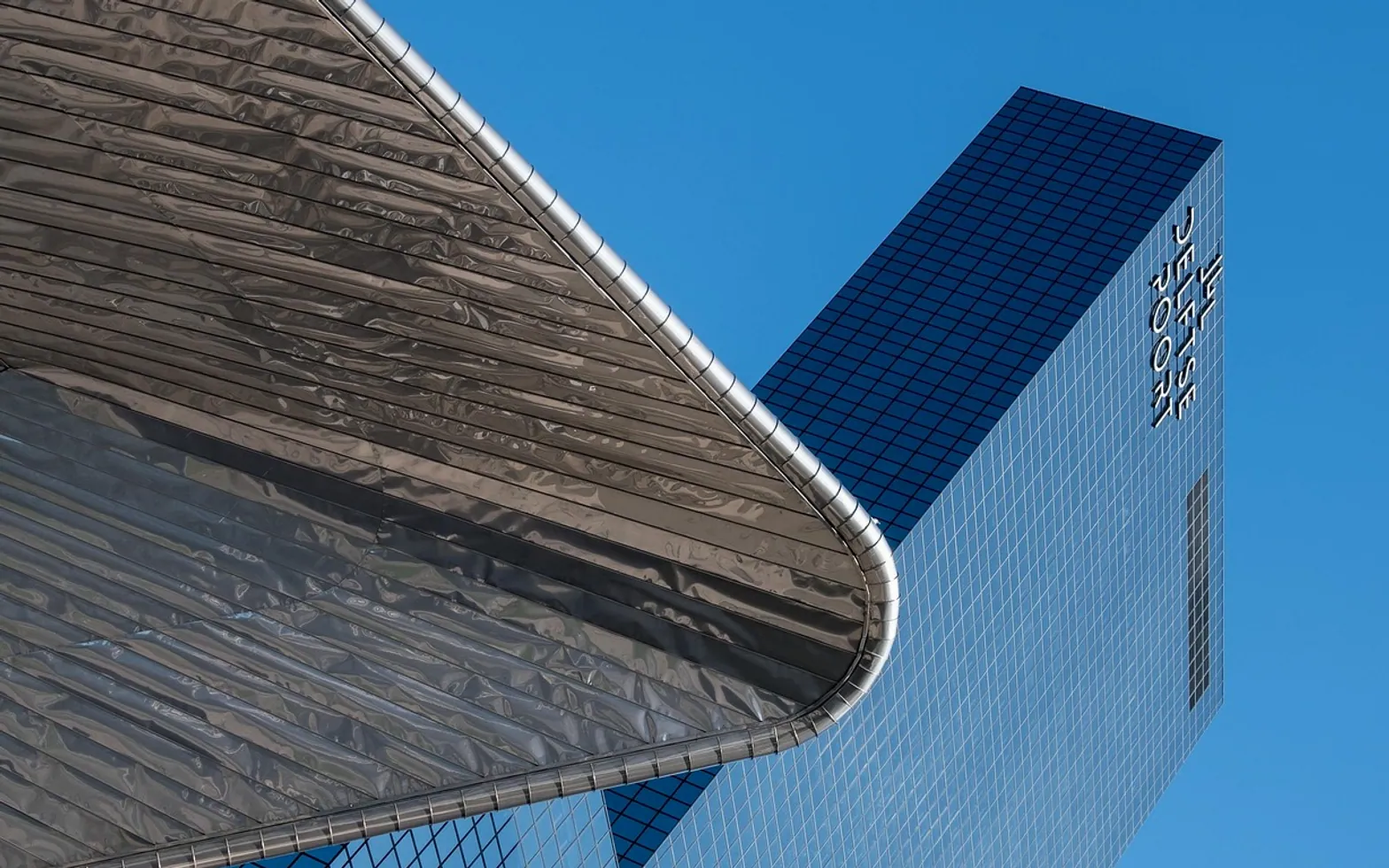
Ask people what makes Rotterdam different from other Dutch cities and most will mention the buildings. The bombing of May 1940 destroyed much of the historic centre, and in the decades that followed the city chose not to recreate what was lost. Instead it became a testing ground for new ideas — first in post-war reconstruction, later in daring towers and public buildings. This walk links some of the highlights in a few relaxed hours.
1. Rotterdam Centraal
Begin at the station. Its great slanting roof, clad in steel and pointing towards the city, is designed to draw travellers out into the centre. Inside, the wooden ceiling and generous hall feel calm and light for such a busy place. Step out onto the square and look back to take in the full shape.
2. The Lijnbaan and post-war planning
Walk south towards the Lijnbaan, one of the first purpose-built pedestrian shopping streets in Europe. Low shops along a car-free street, with housing behind, was a radical idea in the 1950s. Today it is busy and ordinary — which is exactly what its planners hoped for.
3. The Timmerhuis and city hall
Nearby, the stacked, pixel-like glass of the Timmerhuis sits beside the pre-war city hall, one of the few large buildings that survived the bombing. The contrast between the two says a lot about the city's attitude: respect what remains, but don't be shy about the new.
4. The Markthal and the Cube Houses
Continue east to the Blaak area. The arched Markthal combines a covered food market with apartments built into its curve, while the tilted Cube Houses next door show an earlier, more playful experiment from the 1980s. The pencil-shaped residential tower beside Blaak station completes one of the most photographed corners of the city.
5. The Depot Boijmans Van Beuningen (optional detour)
If you have time, take a detour west to the museum park. The Depot is a round, mirrored building that reflects the sky and the trees around it. It is a publicly accessible art storage building, where visitors can see how a large museum collection is kept and cared for, and its rooftop offers wide views.
6. Across the Swan to the Wilhelminapier
Finish by crossing the Erasmus Bridge — read more in our guide to the bridges — to the Wilhelminapier. Here the towers of De Rotterdam, designed as a "vertical city" of offices, flats and a hotel, stand beside older harbour buildings that once served transatlantic passengers. The former shipping offices, now a hotel and restaurant, are a reminder that this pier was once where many emigrants left Europe.
Tips for the walk
- The full route is a few kilometres and flat; trams can shorten any section.
- Architecture centres and local guides offer themed tours if you want more background.
- Combine the walk with our first-visit plan for food stops and neighbourhoods along the way.
- Look up: many details sit above shop-window level.
Small habits
Little things that make a city day easier
Tried on many rainy Tuesdays.
Pack a layer
The wind on the bridges and quays is colder than the forecast suggests.
Tap in, tap out
Forgetting to check out on trams and the metro costs more than the trip.
Go early
Popular sights are calmest in the first hour after opening.
Look up
Many of the best architectural details sit above shop-window height.
Carry a card
Card payments are accepted almost everywhere; some places prefer them to cash.
Lock the frame
If you rent a bike, lock the frame to something solid, not just a wheel.
Stowed alongside · Architecture
- Architecture
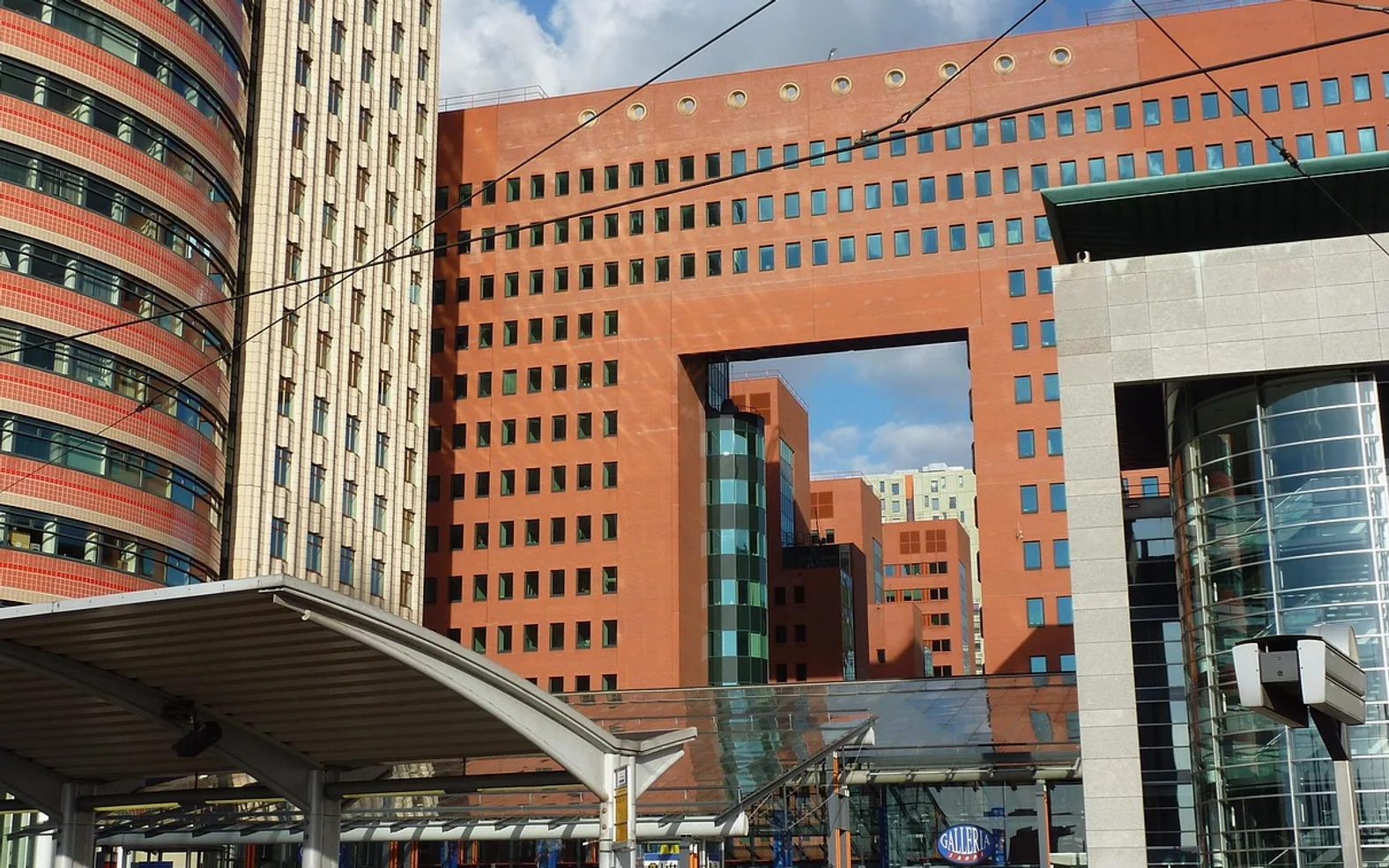 Rotterdam's Bridges: The Swan, the Red Bridge and De Hef Three bridges tell much of Rotterdam's story — a white swan, a red workhorse and a retired railway lift. Here is how to see all three in one walk. 2 min read
 - Architecture
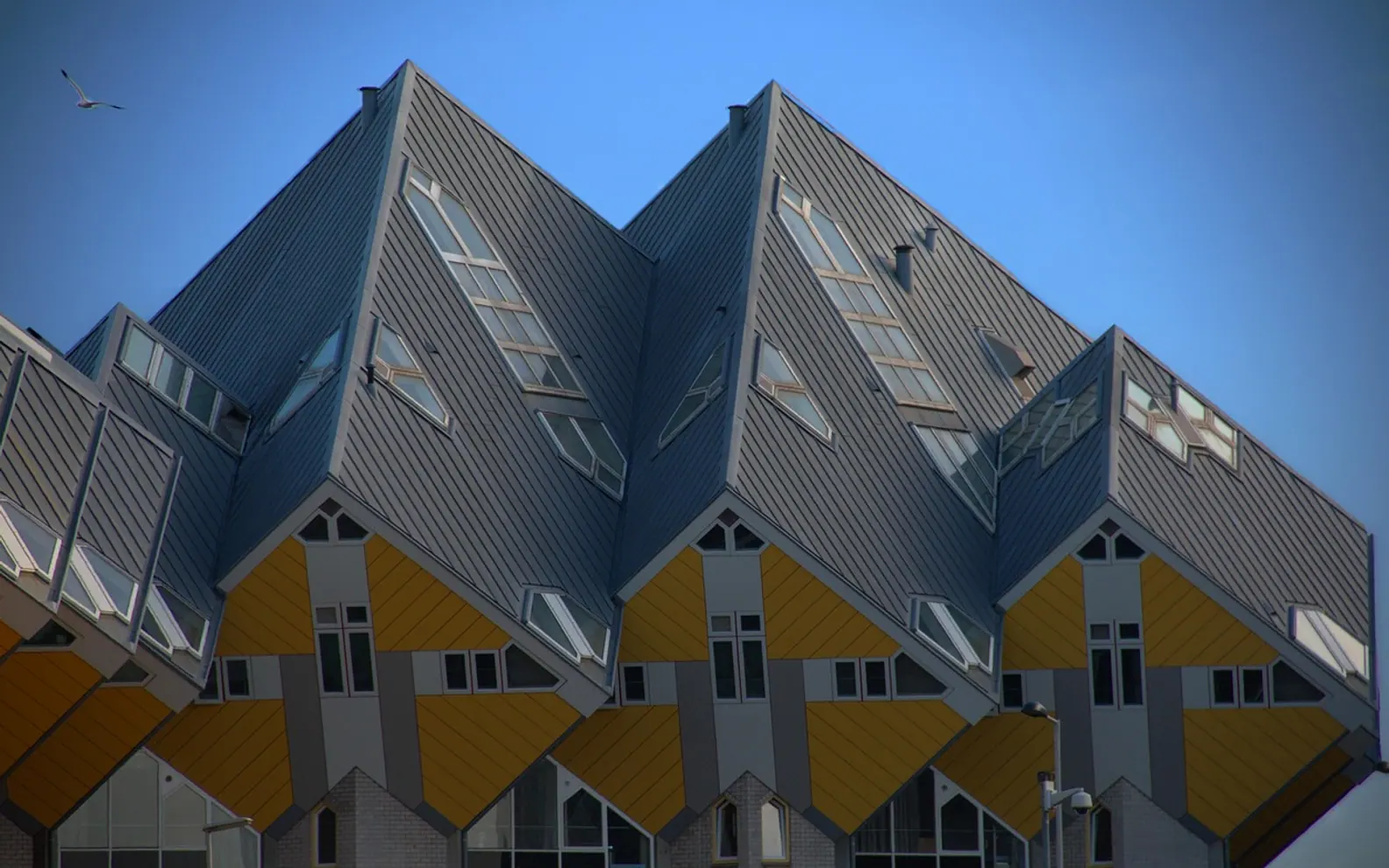 The Rotterdam Cube Houses: What They Are and How to Visit Yellow cubes tipped on their corners above a busy road — the Kubuswoningen are one of Rotterdam's most photographed buildings. Here is the story behind them and how to see one from the inside. 2 min read